Steel Recycling for Heavy Equipment and Industrial Scrap
Steel recycling becomes important when old metal starts taking space away from real work. On a farm, that might be a broken trailer frame behind the shop. On a job site, it could be beams, pipe, or steel cutoffs waiting for cleanup. In an industrial facility, it may be old racks, machine guards, tanks, or equipment parts sitting where active operations should happen.
For Pennsylvania farms, contractors, repair shops, demolition crews, and industrial properties, heavy scrap is not always easy to move. It can be bulky, sharp, weathered, and too heavy for a simple truckload. Still, that steel scrap can often be recycled instead of sitting through another season.
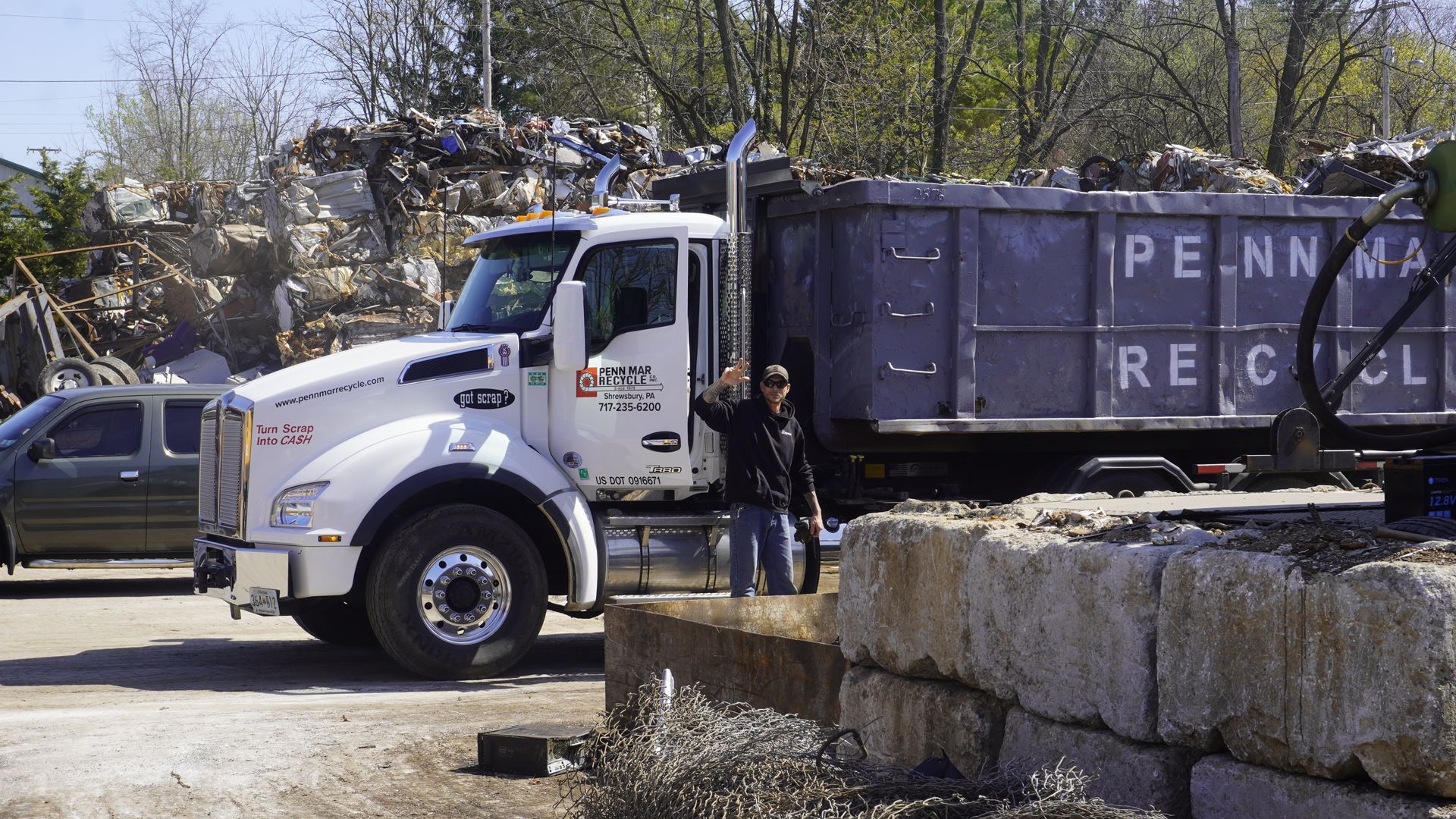
Penn Mar Recycle helps customers choose the right recycling option, whether that means public drop-off, mobile pickup, a roll-off container, or a commercial recycling program for recurring material.
Where Steel Scrap Comes From
Steel shows up wherever hard work happens. It supports structures, protects machinery, carries weight, and handles daily wear. When it bends, rusts, cracks, or gets replaced, it becomes heavy scrap that usually needs a plan.
On farms, steel may come from old gates, posts, fencing, implements, buckets, blades, trailer frames, and equipment attachments. In shops and industrial spaces, it may come from racks, shelving, tanks, machine parts, pipe, plate, tubing, angle iron, and fabrication cutoffs.
The problem is not always the steel itself. It is how long it has been sitting there. A few parts saved “just in case” can turn into a pile that blocks access, slows repairs, or makes a property harder to use.
Common Steel Scrap Sources and Recycling Options
| Type of Steel Scrap | Best Recycling Option | Why It Helps |
|---|---|---|
| Small shop scrap | Retail drop-off | Good for manageable loads brought by truck or trailer |
| Farm equipment scrap | Mobile pickup | Helps with bulky pieces that are difficult to load |
| Demolition steel | Roll-off container | Keeps heavy scrap contained and organized on-site |
| Recurring business scrap | Commercial recycling program | Supports ongoing scrap handling without repeated planning |
| Industrial cleanout material | Pickup or roll-off service | Better for volume, weight, and difficult handling |
Contact Penn Mar Recycle today to set up roll-off container service and simplify scrap metal recycling on your next construction project.
Steel Recycling Process
The steel recycling process starts before the material reaches the scrap yard. Most steel is magnetic, so a magnet can help separate it from aluminum, copper, brass, and other non-ferrous metals. This is useful when scrap has been sitting in a mixed pile near a barn, warehouse, shop, or equipment yard.
Before recycling, it helps to remove loose trash, wood, rubber, and plastic when practical. Machinery scrap should also be checked for fluids, sealed parts, or attached materials that may need review.
For smaller loads, customers can bring steel scrap to a Penn Mar Recycle drop-off location for unloading, weighing, and payment. For larger farm cleanouts, demolition jobs, or industrial recycling projects, mobile pickup or a roll-off container may be the better option.
What Happens After Steel Scrap Arrives
| Step | What Happens | Customer Benefit |
|---|---|---|
| Unloading | Material is directed to the proper area | Keeps the visit organized |
| Weighing | Steel scrap is weighed for review | Gives a clear basis for payment |
| Sorting review | Mixed materials may be checked | Helps avoid burying other metals in steel |
| Processing | Scrap is prepared for recycling | Keeps usable steel moving through the supply chain |
| Payment | Eligible material is paid by weight and classification | Makes recycling practical and worthwhile |
Contact Penn Mar Recycle today to set up roll-off container service and simplify scrap metal recycling on your next construction project.
Value of Steel Scrap
The value of steel scrap depends on weight, material type, preparation, and market conditions. Because steel is usually recycled in larger volumes, weight matters. One pipe or bracket may not seem like much, but a trailer full of frames, racks, equipment parts, and steel scrap can become a useful load.
The value is not only about payment. A clearer shop is easier to work in. A cleaner equipment yard is safer to move through. A demolition site with organized scrap handling is easier to manage. For businesses, a recycling plan can also reduce the time spent figuring out what to do with metal waste after every project.
Sorting can also make a difference. Copper, brass, aluminum, and stainless steel should be kept separate when possible so they are not buried under heavy steel.
Penn Mar Recycle can help customers understand what should be separated before drop-off, pickup, or container service.
Why Heavy Scrap Should Not Sit Too Long
Heavy scrap is easy to ignore because moving it takes effort. But once it blocks a gate, loading area, repair bay, storage corner, or equipment path, it becomes more than old metal.
On farms, steel scrap can interfere with tractors, trailers, feed deliveries, and seasonal work. On industrial sites, it can affect forklift movement, employee safety, and storage efficiency. On construction or demolition sites, loose steel can slow cleanup and make the next phase harder to start.
Steel recycling gives customers a clear next step: bring it in, schedule pickup, request a roll-off container, or set up a commercial recycling program if scrap is ongoing.
How to Prepare Steel Scrap Before Recycling
Preparation should focus on safety and basic sorting, not perfection. Start with one area at a time and look at weight, sharp edges, stability, and access before moving anything.
Helpful preparation steps include:
- Use a magnet to identify likely steel
- Remove loose trash and non-metal items when practical
- Keep machinery scrap with fluids separate for review
- Separate aluminum, copper, brass, and stainless steel
- Secure heavy loads before transport
FAQs About Steel Recycling
What types of steel scrap can come from heavy equipment?
Heavy equipment can produce steel scrap from buckets, blades, frames, guards, brackets, attachments, worn parts, and structural components. Rusted or bent steel may still be recyclable if it can be handled safely.
Do I need to sort steel scrap before bringing it in?
Sorting is helpful because it can make unloading and review easier. Penn Mar Recycle recommends separating steel from trash, wood, rubber, aluminum, copper, brass, and stainless steel when practical.
When should I request a roll-off container for steel scrap?
A roll-off container may make sense when steel scrap is too heavy, bulky, or frequent for regular drop-off. It is especially useful for demolition work, commercial cleanouts, industrial recycling, and large farm equipment scrap projects.
If old steel is taking up space around your farm, repair shop, industrial facility, job site, or equipment yard, Penn Mar Recycle can help you recycle it responsibly. Bring your steel scrap to a drop-off location or contact the team to discuss pickup, roll-off container, or commercial recycling options.